
The complete guide
Choosing Solar Porch Lanterns for Your Entrance
A porch can look welcoming by day and feel quite different after sunset. Finding your keys or spotting the door handle becomes harder when the entrance has little light. Adding a wired fitting may be more work than you want for a small area.
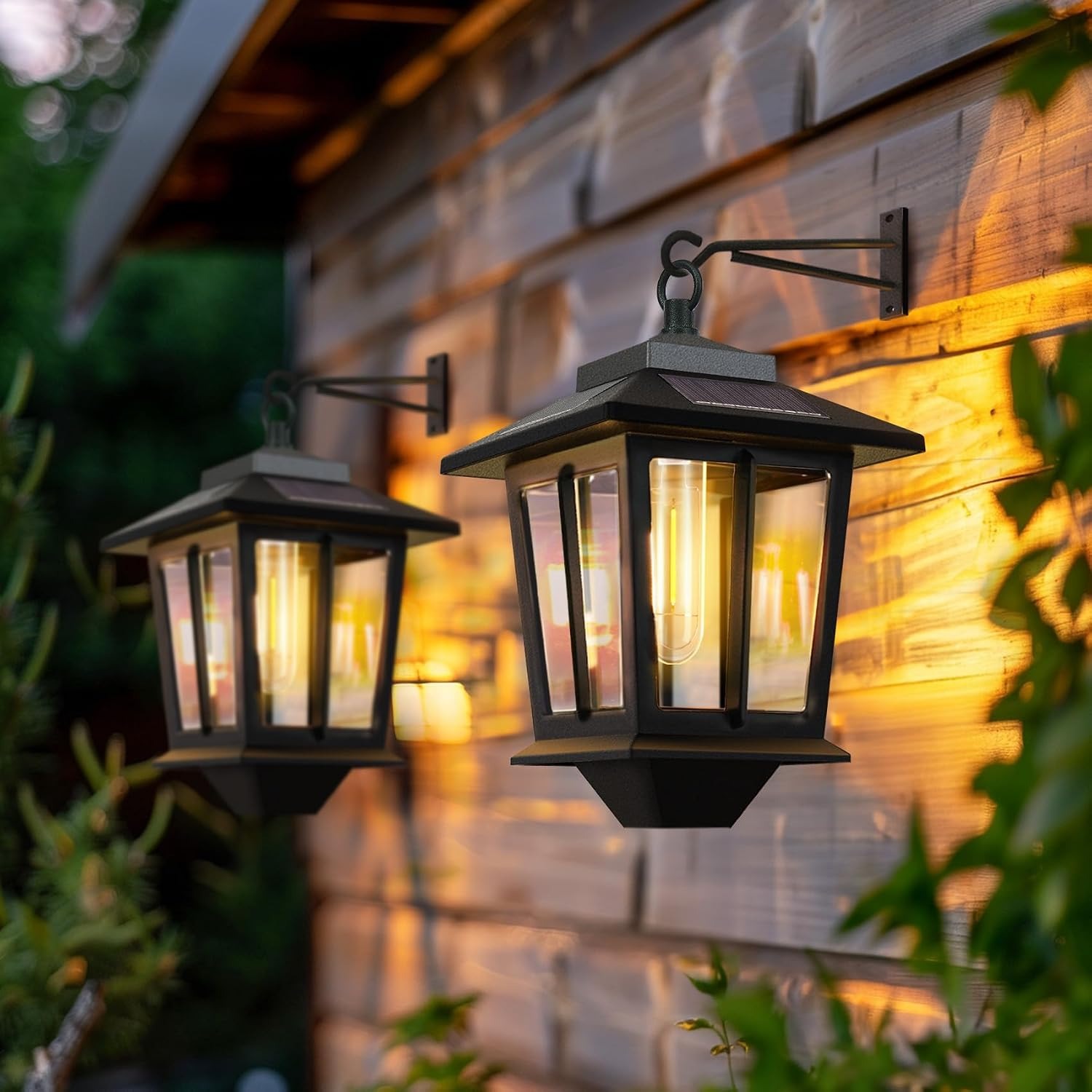
A solar porch light offers another approach. It collects energy during daylight and uses it after dark, without a mains connection. This PASAMIC set gives you two matching lanterns with warm white LEDs and automatic dusk sensing.
The main question is not just whether you like the lantern shape. It is whether your chosen spot gets enough sun and whether the light output suits the job. A few checks before buying can save a disappointing installation.
Start with the light you actually need
Think about what you want to see at night. A little light around a doorway is a different task from lighting a driveway, a long path, or a set of steep steps.
These lanterns have a listed maximum output of 60 lumens. The supplier does not say whether that figure applies to each lantern or the pair. That makes it sensible to view them as local outdoor lighting rather than assume they can replace a powerful wired fitting.
For a porch, the aim may be a warm glow near the entrance. Around seating, you might want light that helps the space feel less dark. Those are different expectations from bright task lighting.
If you need dependable visibility for a hazard, plan suitable lighting for that purpose. Solar runtime changes with charging conditions, so these lanterns should not be your only answer for safety-critical areas.
How the solar system works
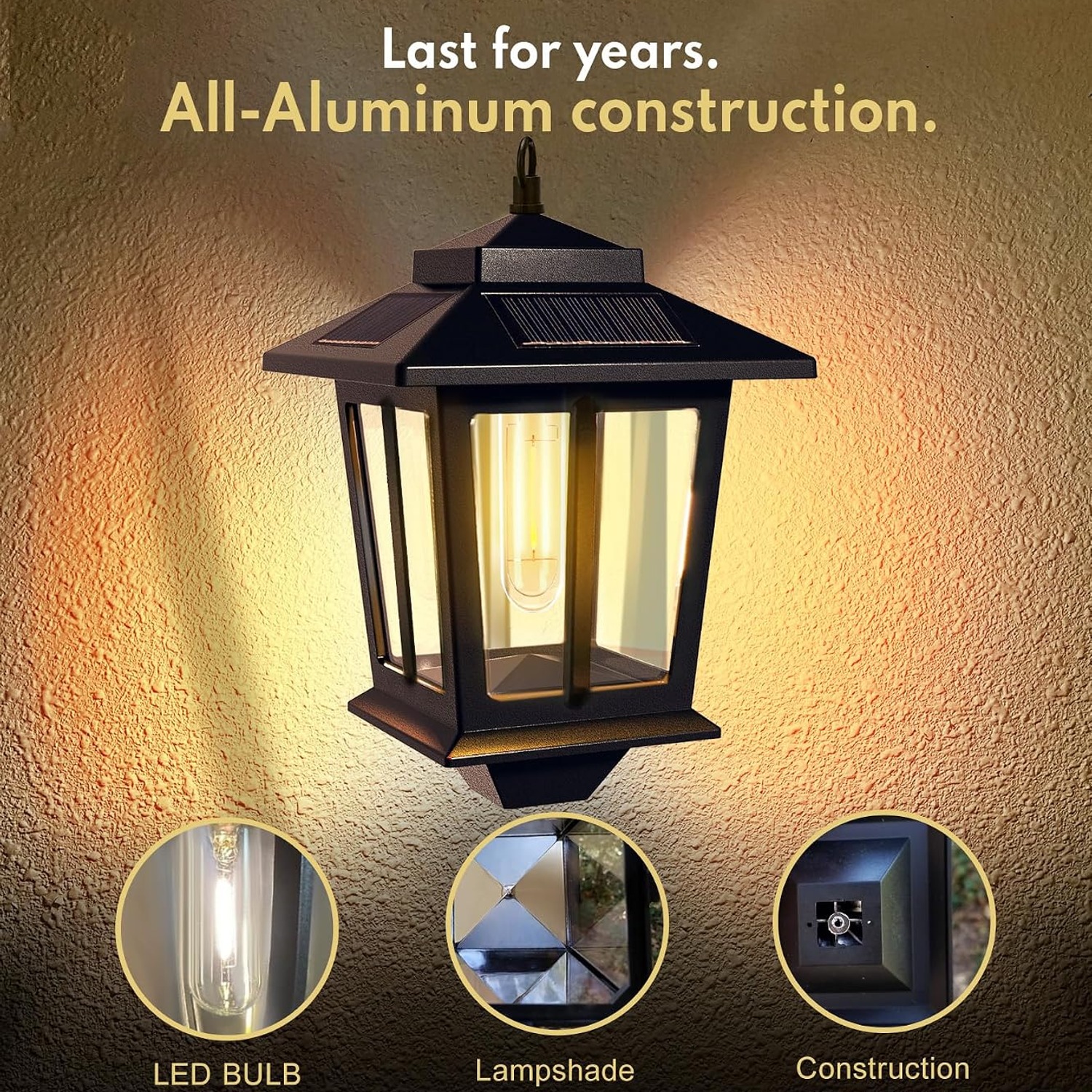
The supplier describes four built-in solar panels and rechargeable batteries. During daylight, the panels collect solar energy. The batteries store it for use when the light switches on.
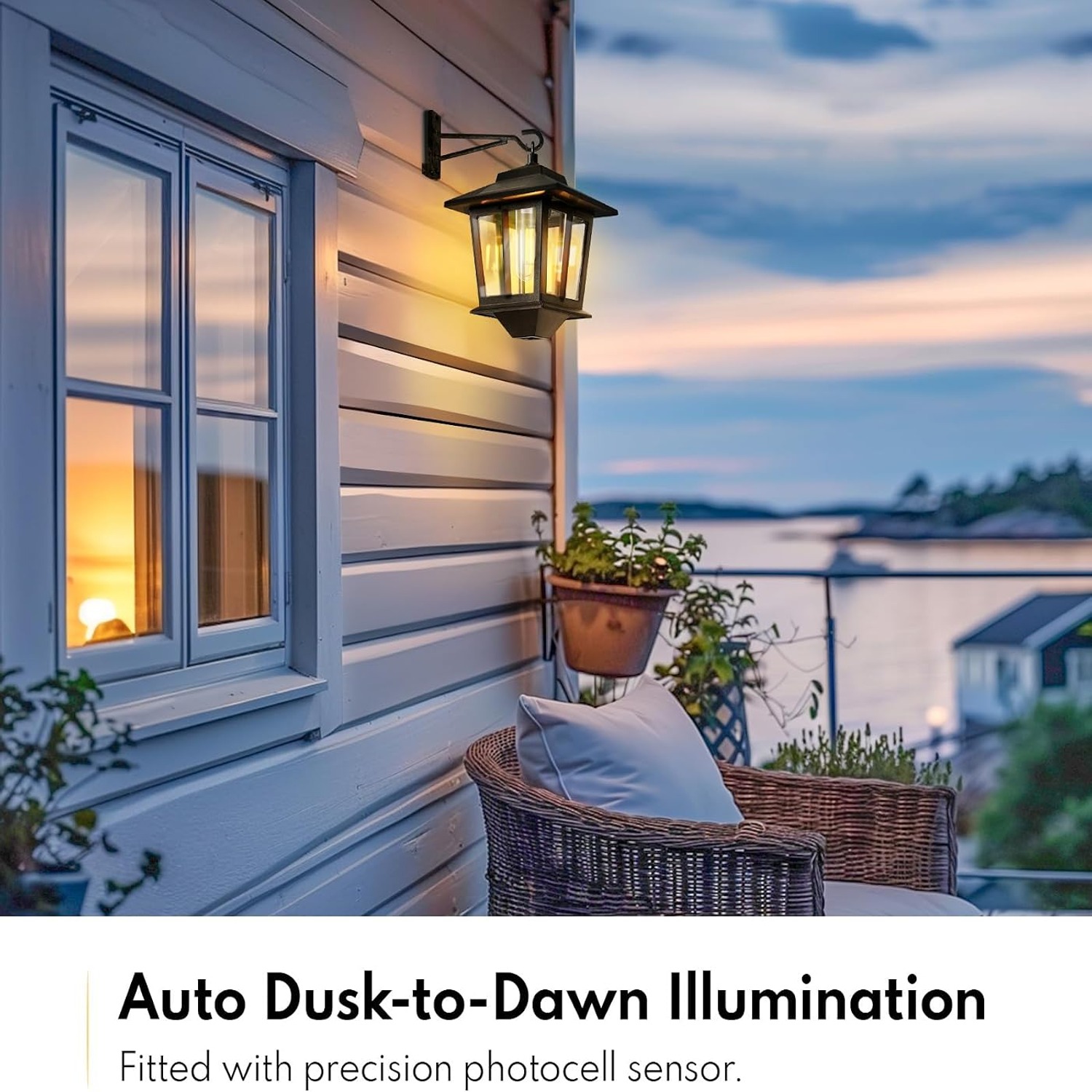
A dusk-to-dawn sensor handles the daily on and off cycle. The lights remain off during the day while charging, then turn on in darkness. There is also a switch on the cover that needs to be turned on before first use.
That automatic cycle is useful when you do not want to remember an outdoor switch each evening. It does not mean the lanterns have an unlimited supply of power. Their available energy still depends on the day’s charge.
The record does not describe a motion sensor. If you want a light that responds specifically to movement, do not treat dusk sensing as the same feature.
Sunlight matters more than the wall
The right wall for the look of your home may not be the right wall for solar charging. Deep porches, roof overhangs, nearby trees, and tall fences can all reduce the sunlight reaching a panel.
Before mounting wall mounted solar lanterns, watch the proposed spot through the day. Look at where the sun falls, not just how bright the area seems. A shaded porch can have plenty of daylight without receiving much direct sun.
The supplier estimates 6–8 hours of direct sunlight for charging. That is a useful planning guide, not a guarantee for every day or season. Cloudy weather and short winter days can affect the result.
Because the panels are built into the lanterns, the light position and charging position are linked. The record does not describe a separate panel that can be placed elsewhere. If the entrance stays shaded, another lighting type may be a better fit.
What dusk-to-dawn means for runtime
Dusk-to-dawn describes the switching system. It does not promise that the batteries will keep the LEDs lit until sunrise in all conditions.
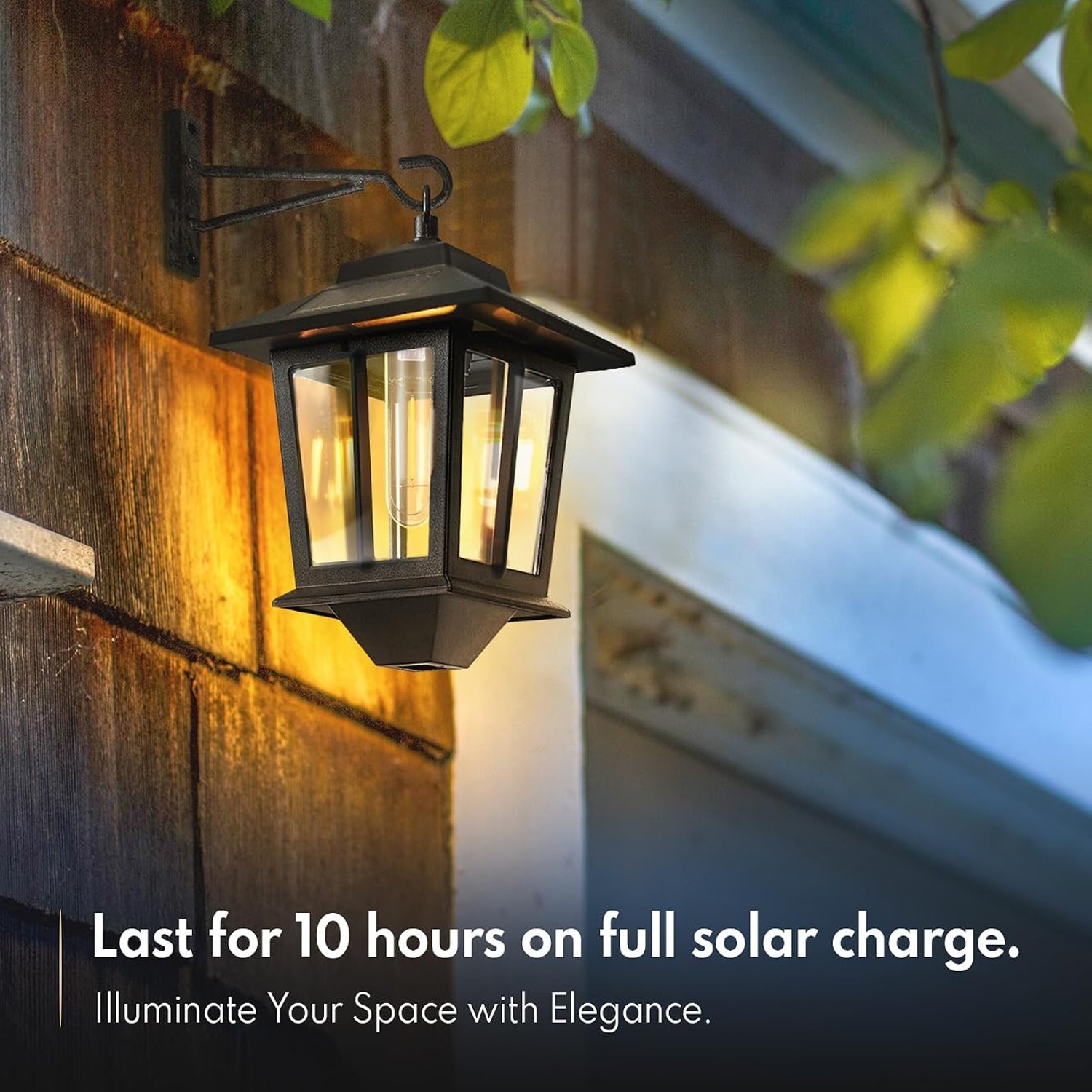
The supplier describes roughly 8–12 hours of lighting after charging. A separate product detail lists 10 hours. Both are best treated as estimates rather than fixed results.
A sunny day may give a different outcome from several dull days in a row. This is worth remembering if you usually arrive home late or want light through a long winter night.
When comparing dusk sensing outdoor lights, separate two questions. Does the sensor switch the light at the right time? Has the battery stored enough energy to run for the period you need? The sensor cannot make up for poor charging.
Warm light and a matching pair
The listed 3000 K colour temperature gives these lanterns a warm white tone. If you prefer a softer-looking entrance to a cool white one, that detail may matter more than a decorative feature.
Warm white solar lanterns can also suit a patio where the aim is relaxed evening light rather than a bright work area. Still, colour temperature does not tell you how far the light reaches. That depends on output, placement, and the space around it.
Two matching lanterns offer a few layout choices. You could place one on each side of a door, or use them at separate points along a patio wall.
There is no need to force a balanced layout if one side gets much less sun. Charging conditions should guide the position, even when an evenly spaced pair would look tidier.
Check size before drilling
Size is one detail that needs extra care with this listing. The supplier record contains conflicting measurements, so this page does not present one set as confirmed.
If you have a narrow strip beside a door, a low overhang, or limited room near a gate, ask for verified dimensions before buying. Check the full lantern size as well as how much room the mounting arrangement needs.
Allow room for nearby doors and shutters to open. Think about whether the lantern will sit where a person could knock it while carrying bags or moving outdoor furniture.
The listed weight is 299 g, but the record does not clearly say whether that refers to one lantern or the set. Do not use that number alone to choose mounting hardware.
Mounting and hanging options
The supplier describes wall brackets and screws as included. Installation does not require mains wiring, but it still calls for a secure fixing.
Different wall materials need different hardware. Supplied screws should not be assumed suitable for every surface. Follow the product instructions and choose fixings appropriate to the wall.
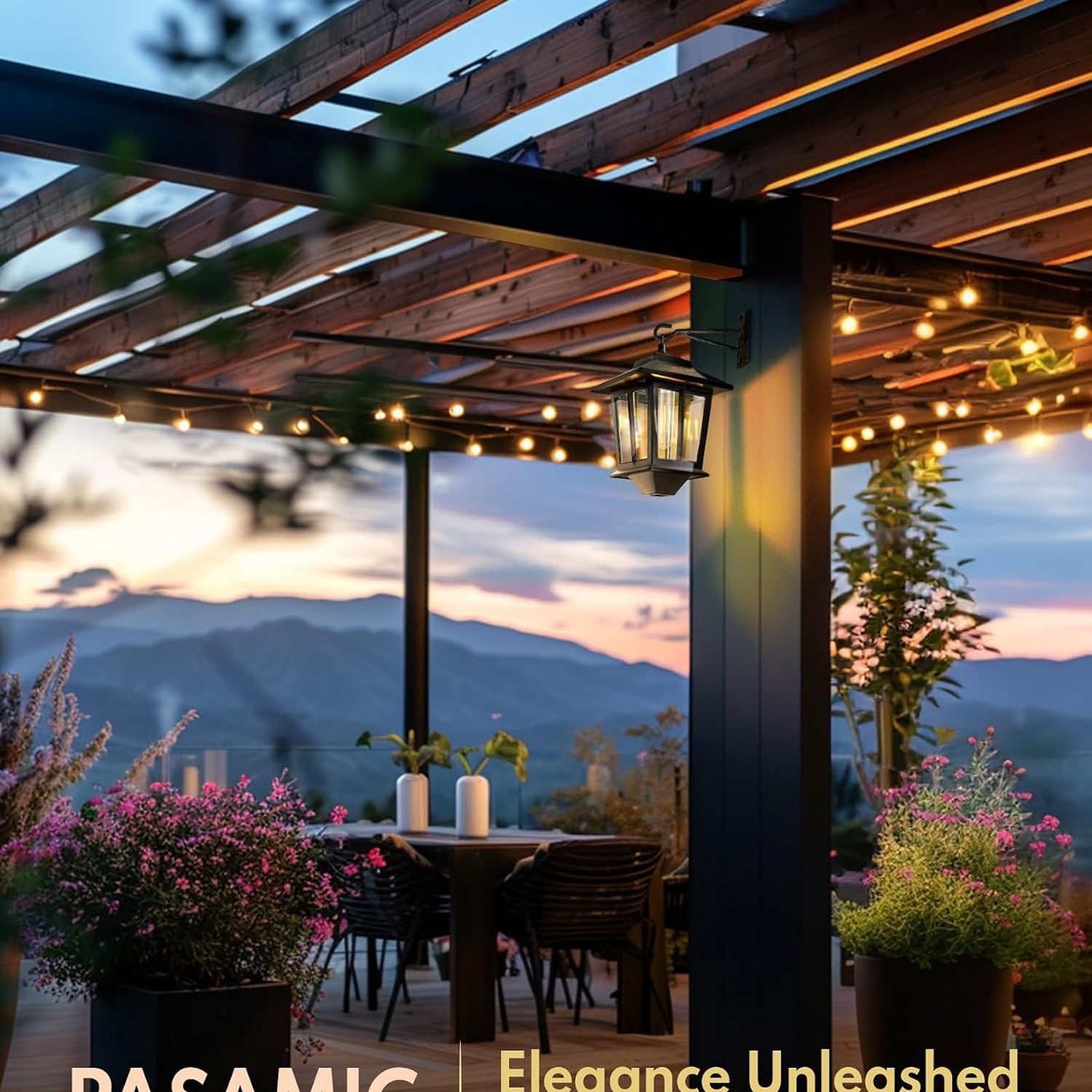
The hanging design also allows placement on a suitable hook. This may be useful where a wall-mounted position is not practical, provided the support is secure and the panels can still receive sunlight.
For renters, no wiring outdoor lights can be appealing, but drilling may still need permission. Check your tenancy rules before attaching brackets. A solar power source does not remove the need to consider the mounting method.
Read the weather rating carefully
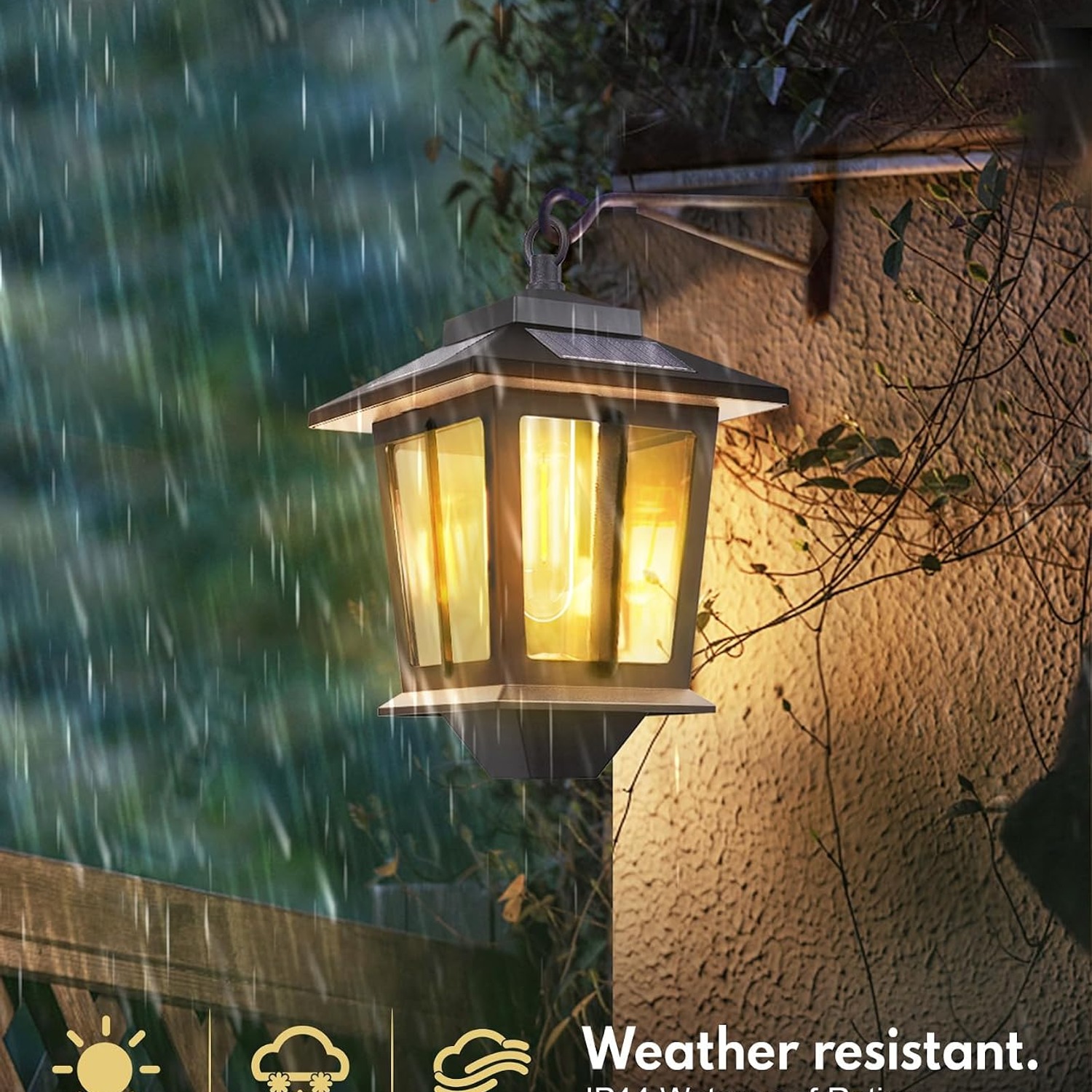
The supplier describes aluminium and tempered glass construction, with black housings and a coated finish. It also lists an IP44 rating.
Although the listing uses the word waterproof, it is better to treat these as splash-resistant outdoor lanterns. Do not assume they can be submerged, pressure washed, or exposed to every possible weather condition without care.
Choose a position with normal outdoor use in mind and follow the supplied instructions. Keep the lanterns away from places where water pools or where a hose jet regularly hits them.
If you are choosing black solar wall lights for a very exposed location, ask whether the product is suitable for that setting. A broad outdoor label is not the same as a promise for every site.
Care that supports charging
Solar lights depend on their panels receiving light. A layer of dust, fallen leaves, or bird mess can get in the way, so make panel checks part of your normal outdoor tidy-up.
Wipe the panels and glass gently with a soft, damp cloth. Avoid abrasive pads and harsh cleaning products. Do not use a pressure washer or immerse the lanterns.
Check that the mounting remains secure, especially if you use a hanging hook. Nearby plants may grow into a position that shades the panels, even when the original location was sunny.
Battery details in the record conflict. Before replacing a battery, confirm the required type from the product instructions or supplier. The same care applies to bulbs. Additional replaceable bulbs are described as included, but replacement compatibility should be checked rather than guessed.
Who this pair is likely to suit
This set is worth considering if you want solar entrance lights for a spot that receives direct sun. It may also suit a small patio or deck where warm local lighting is more important than high brightness.
It is less suited to a deeply shaded entrance or a job that needs guaranteed, strong light all night. In those cases, a wired option or a different solar arrangement may be more practical.
For gifting, check the recipient’s outdoor space first. Solar porch lanterns are easier to choose well when you know there is enough sun, a suitable mounting surface, and room for the fittings.
Delivery timing, warranty terms, and return conditions are not specified in this product record. Review the storefront information before ordering, especially if the lights are needed for a particular date.
The short version
The PASAMIC two-pack combines built-in solar charging, warm white LEDs, and dusk-to-dawn switching in a hanging wall-lantern design. It offers a way to add local outdoor light without mains wiring.
Start with sunlight, then check the lighting task and available space. Confirm the dimensions and any replacement parts you may need. With those points settled, you can judge whether this pair belongs beside your front door or whether another lighting option would serve you better.